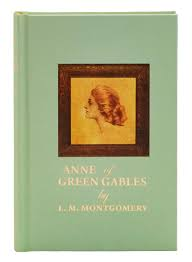
Any trip to Prince Edward Island is sure to involve learning about the legend of the story – Anne Of Green Gables by L.M. Montgomery. Originally published in 1908, the novel has sold over 50 million copies worldwide and turned the Cavendish area of PEI into a must-see part of the island with a museum, preserved house from the era, and a tourist area filled with restaurants and shops.
The book follows the trials and tribulations of 11-year-old orphan Anne Shirley who is mistakenly sent to live with siblings Marilla and Matthew Cuthbert on their family homestead in Avonlea. Anne quickly wins over Matthew with her charming, nonstop chatter and she is then allowed to stay in their home rather than a boy they had originally requested from the orphanage.
The book is a charming slice of life from early in the last century. Each chapter focuses on a new adventure or life lesson that Anne ha to figure out. The countryside turns into a whimsical place of discovery for Anne and her best friend Diana. The feel-good story has captured hearts for over a hundred years. As another reader said, by the time you come to the end of the book, you are sad that you will not be spending more time in the world of Anne Of Green Gables.
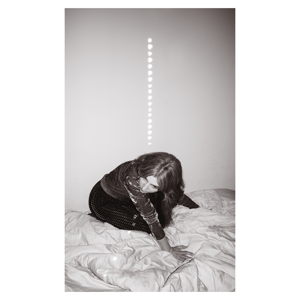
A companion piece to her last album, Something In The Room She Moves, Materia is Julia Holter’ seventh studio album. Originally released as a standalone single, “The Laugh Is In The Eyes” is a sun dappled, swirling playground of sound – “I still love that day/We chased our tails around”. “Fantasy” has celestial bells ringing.
Both producing and playing most of the instruments herself, Holter records two new versions of her “Materia” track. The first is a woodsy jazz recording, the second closes the album by leaning into R+B. In between is the 10 minute epic, “My Twin”. Holter’s songs exist on a different plane than most of her peers, Materia gives us seven more songs to get lost in late at night.
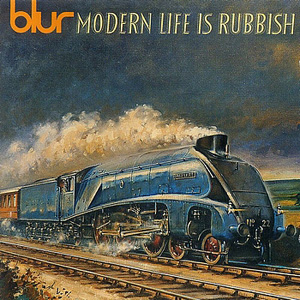
Things were not looking good for blur in the early 90s. Debut album Leisure had been a moderate success but a disastrous US tour, the changing tides of British music and the potential of being dropped by their record label put them in a rough spot. With that in mind, the band went back to work with XTC’s Andy Partridge in the producer’s chair. Things did not go as planned and they soon parted ways with Partridge. In stepped Stephen Street who had worked on their first album, and that’s when things started to change.
Preceded by stand alone single “Popscene” the year before, Modern Life Is Rubbish was released in May of 1993. As a direct reaction to the American grunge sound, blur retreated back into their British roots for an album inspired by The Kinks, Small Faces, The Jam, etc. Record boss David Balfe sent the band back looking for a single which singer Damon Albarn dutifully provided with the snappy “For Tomorrow”. Cruising around London with a chorus of “la la la” and the bright vision of, “And so we hold each other tightly/And hold on for tomorrow”, the band was looking towards the future.
Two further singles followed. Layers of Graham Coxon guitars powers “Chemical World” and oompah of music hall sounds lifts the mundane retelling of British life of “Sunday Sunday”. With all three singles barely scraping into the top 30, other potential singles were not released. “Advert” is a punk rock take on the drudgery of 9 to 5 working life. “Star Shaped” is a wide eyed cheery pop song and “Blue Jeans” has more in common with the sound of tracks off Leisure but with the hopeful lyric, “I don’t really want to change a thing/I want to stay this way forever”. The mention of Portobello Road on the track puts the heart of this song straight into the west end of London.
The band then touches on character a profile on “Colin Zeal” that would become a mainstay of future song themes. Dave Rowntree’s drums are more prominent on “Oily Water” and the elastic bass playing of Alex James provides a deep groove throughout. Modern Life is Rubbish is the start of a trilogy of albums centered on English life that was later perfected on Parklife and had ran it’s course by the end of The Great Escape. While down and out, blur managed to put together an album that helped usher in the Britpop era that they would help rule over for the next several years.
The jump in quality of the extra material on disc two over the Leisure B-Sides is remarkable. Several of the songs appear on the North American version of Modern Life Is Rubbish including the “Popscene” single that while it missed the UK top 30, it is considered a foundational song in the Britpop movement. The disc is filled with quite good British indie rock songs including “Mace”, the 60s influenced “Young and Lovely”, and “When The Cows Come Home” that continues the sound and themes of the main album. “For Tomorrow (Visit To Primrose Hill Extended)” version is a treat. The second half of the six-minute version adds a brass band section that creates a new groove to the song. “Chemical World (Reworked)” is a jangly guitar take on the single and their version of the classic “Maggie May” is a knees up good time, the joy is infectious.
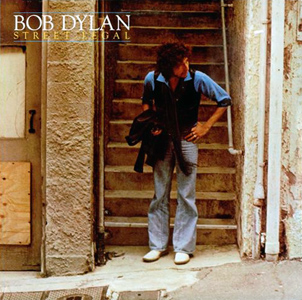
In the 70s, Bob Dylan was continuously putting out new music. His 18th studio album was recorded at his own Rundown studios in LA and released in June of 1978. Horns and back-up singers appear throughout on the album produced by Don DeVito. This is evident on first single, “Baby, Stop Crying”, a hit in the UK/Europe. The slower song sees Dylan repeat the chorus many times over. First track, “Changing Of The Guards” is the first track and second single. Sounding a bit like mid tempo Tom Petty, its rollicking nine verses have hooks to spare.
“No Time To Think” is a waltz with really good guitar playing and nine more verses. The album finishes on a high with “We Better Talk This Over”. Really good piano playing with a country influence. Not to be outdone, “Where Are You Tonight? (Journey Through Dark Heat)” is a rousing closer, leaning into it’s organ playing. The reviews for Street Legal initially were not kind. Those looking for Dylan’s Godlike 60s output won’t find that here. Instead it’s nearly 50 minutes of really good 70s guitar music with above average pop lyrics.
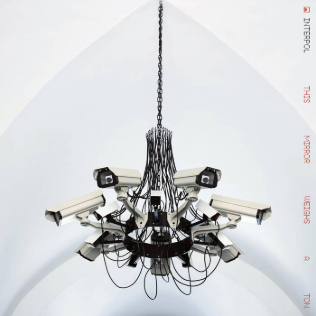
The last year has seen Interpol go through some changes. Since original bassist Carlos Dengler left the band in 2010, they had continued on as a three piece. This year they added longtime touring members Brad Truax (bass) and Brandon Curtis (keyboards) to the official line-up, though only Truax has recorded with the band thus far. Working with producer Andrew Wyatt, the band released their eighth studio album, This Mirror Weighs A Ton in late August.
The album follows their dark sound, with red and white shades of past releases. The title track and first single of a double A-side starts off the record with a heavy, atmospheric air. “The maniac in your head/Still sleeps in archways” sings Paul Banks. “See Out Loud” is the other side of this double A-side release, a more driving Interpol track. An elastic drumbeat starts “So Rides The Reindeer” with a bit of nice guitar, the vocals recall New Order.
Continuing to explore the darker corners, here the band moves a lot within their world. Piano and keys play an important role on the album. They add a dreamy feel to “Iron City” and lay a bed for the stark vocals on “Sudden”. Never far from an interesting moment, a great chorus, a solid drum sound –great tracks on The Mirror Weighs A Ton keep bubbling to the surface through it’s 50+ minutes.