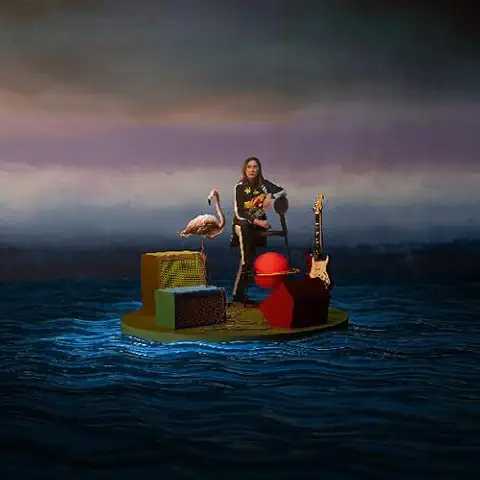
The voice is unmistakable from the one that is a key component of her band, Portishead. Lives Outgrown is singer Beth Gibbons’ first solo album. It has a woodsy vibe with an atmosphere of ghosts swirling around a campfire. “Tell Me Who You Are Today” has a bit of nice guitar but then a foreboding tension fills the air. “Burden of Life” has drums sounding like they are coming from deep in the forest. Later, those same drums are more propulsive on “Reaching Out”.
“Floating On A Moment” is perfectly named as it does make it feel like you are floating in a river, heads up. The sound of birds chirping close out “Whispering Love” and the album. Lives Outgrown has gained much critical acclaim for it’s mournful folk sound and songs that speak about growing old and mortality. It may not register for all but for many, it will one of the better albums of the year.
The first studio album for Madonna after the Immaculate Collection greatest hits album wrapped up her first era was Erotica in 1992. For this album, Madonna worked with Shep Pettibone on a set of songs that was released at the same time as her infamous Sex book. The title track was the first single released. More explicit than past recordings, the club beat and catchy chorus took the song to #3 in the US. For “Deeper and Deeper”, a disco house vibe is worked into her sound with a couple of lines from her song “Vogue”. The song has references to Mommy and Daddy with a story of a deeper sexual awakening. The memorable 70s inspired video helped push the track into the top 10 and is one of her best tracks of the 90s.
The album is front loaded with singles. Her remake of the Peggy Lee classic “Fever” fails to ignite while “Bye Bye Baby” has a slight Everly Brothers feel to the chorus on a single released outside of the US. “Bad girl drunk by six/kissing someone else’s lips” on “Bad Girl” sees the protagonist torpedoing yet another relationship. Other tracks feel like rehashes of what has come before. “Where Life Begins” is filled with terrible sexual double entendres and covers similar territory as “Erotica” but not nearly as well. Worse is the studio joke song “Did You Do It” that has the beat from an earlier track with Andre Betts freestyling about whether he’s slept with Madonna. It’s atrocious.
Erotica is tailor made for the burgeoning CD era. The beats are digitally crisp and the running time comes in at 75 minutes, about 35 minutes longer than most of her previous albums. The second half of the album features the stellar ballad “Rain” that has a warmer feel than what came before it and the album closes with the minimal hip hop beats of “Secret Garden”. With the extended running time, Erotica simply does not have enough good songs to make listening all the way worthwhile. But with the digital age, also came the skip button that comes in handy when listening to Madonna’s first album of the 90s.
Remarkably, Bright Future is Adrianne Lenker’s sixth studio album even with the success she has had as the lead singer in Big Thief. The spare album was released in the spring 2024 and is enriched with many emotions. The way she sings “don’t know what I’d do without you” on the chorus of “No Machine” makes it heartbreaking or the dusty piano that plays beneath “Real House” where she sings, “Now 31 and I don’t feel strong”.
“Vampire Empire” is a bit more rough and ready while “Feel Treasure” has a sort of epicness that Simon and Garfunkel could ring out of their minimal arrangements. Bright Future ends with two terrific songs. She is joined on the chorus by Nick Hakim on “Donut Seam” that makes it sound a bit like Bon Iver on a track that sings to the human condition of swimming and kissing while the world burns. “Ruined” has her best vocal on the album on a track that is a bit more pop in nature, though one with plenty of emotion. Adrianne Lenker is one of those rare artists whose solo work is just as intriguing as her main gig.
In 1979, Simple Minds were keen to quickly follow-up their debut album that they were not happy with a mere seven months later. Once again working with producer John Leckie, the Glaswegians decamped to Rockfield Studios in Wales to record what would become Real To Real Cacophony. The first track, “Real To Real” sees synths firing out signals for a disco in another world. “Carnival (Shelter in a Suitcase)” has a circus keyboard with a solid rhythm section behind it on a song that fits in well with the post punk movement. “Calling Your Name” has a similar sound but adds dancefloor moves.
The only single released from the album was “Changeling” that has a more straightforward guitar riff. Better is “Premonition” that has elements of the band’s sound that they would take to stadiums in the mid 80s, not to mention a sound that U2 would also further develop. Along with these tracks, several instrumentals appear including the ominous “Cacophony”. On Real To Real Cacophony, the band does what it wanted to do by moving their sound in a more art pop direction that takes in heroes like Roxy Music and Bowie but also creates their own world.
The Kaiser Chiefs make it easy to remind you how many albums they have recorded on The Kaiser Chiefs’ Easy Eighth Albums. Easy it is with barely a moment that is not sugary to consume like cotton candy. “Beautiful Girl” has a light guitar riff on a track whose chorus sounds ripped from a One Direction outtake. The legendary Nile Rodgers co-writes first single “Feeling Alright” that rides a bass groove as Ricky Wilson sings, “No one you love is ever dead/they’re always in your head/in your heart dancing”.
“Burning in Flames” sounds ready to be sampled as an EDM anthem while “How 2 Dance” sounds spot on like the band Black Kids circa 2008. Towards the end, the album starts to drift with several unmemorable songs before rebounding with “The Lads”. Now well into their forties, the group sounds like a band half their age. Whether that’s a positive or negative depends on how much you enjoy fluffy indie dance rock.