Posted in Paper Chase

Monica Ali – Brick Lane

Monica Ali’s first novel, Brick Lane, was published in 2003 and shortlisted for the Man Booker Prize. The story follows Nazneen as she grows up in a village in Bangladesh before moving to London in an arranged marriage to someone double her age.  Chanu is a good man but full of bluster and certainly not the one she would have chosen for herself.  While raising two children, Chanu decides that living on the lower end of British society is not for him and wants the family to move back to Bangladesh.

The rest of the family is resistant, while Nanzeen looks for a life outside of the marriage.  Part of the book deals with Nanzeen’s sister who stayed in Bangladesh and lives a very different life. That part of the story that takes up sections of the book was not as compelling and at times took away from the main story. Overall, it is an interesting look into a world that some of us would not normally see.

7/10

Posted in Paper Chase

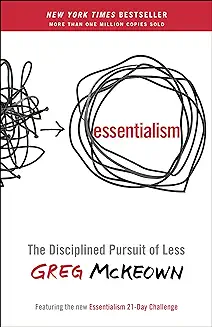
Greg McKeown – essentialism

Originally published 10 years ago, Greg McKeown’s book essentialism is a New York Times bestseller and regularly shows up on productivity reading lists to this day. The book focuses on three main areas of evaluate, eliminate and execute.  Look at the core things in your life/job and concentrate on those few things that will see you get further rather than trying to do it all.  Ex – say no to meetings and assignments that will distract you from your core pursuits. Or, instead of having a closet full of clothes that you never wear, get it down to the basics of what you wear regularly and donate the rest.

Block out the noise, lose the Fear of Missing Out, enjoy doing less and not having to keep up with the Joneses. With social media, this does get harder to do and a person can often feel like they are not doing enough.  It is an interesting book and surely helpful to many.  As a person who can say no in many situations, except in buying too much music, I didn’t get quite as much out of it but it gets a slight bump in ratings as it is one that I will likely refer back to from time to time. 

7.5/10

Posted in Paper Chase

Charles Bukowski – Post Office

Charles Bukowski’s first novel, Post Office, was published in 1971. Taking on the persona of Henry Chinaski, the book is a semi-autobiographical time of Bukowski’s life where he worked as a letter carrier, quit to bet on horse racing, then returned a few years later to become a mail clerk. In between, Chinaski has several boozy relationships with various women that never work out. 

A highly readable book, Post Office is a non-judgmental look at a way of life for someone with little ambition other than to get through the day with a, roof over his head, lady on one arm and a case of beer in the other.

9/10

Posted in Paper Chase

Andrew Mon Hughes, Grant Walters & Mark Crohan – The Bee Gees in the 1970s

The Bee Gees in the 1970s is the follow-up to the 1960s book that was published in 2021. The three music writers of Andrew Mon Hughes, Grant Walters, and Mark Crohan write about all the songs the band recorded throughout the 70s.  At the beginning of the book we are greeted with the fact that the brothers were completely broken at the beginning of the decade, each working on separate projects. 

But by 1979 they were the biggest band in the world with smash hits that would eventually lead to Bee Gees overload. The band got their groove back while working with producer Arif Mardin on songs such as “Jive Talking” and “Nights on Broadway”.  Eventually the brothers would contribute greatly to the Saturday Night Fever OST that saw them hit the stratosphere of fame and fortune.  The 1970s edition of the series is a well-researched book that will have the reader regularly searching for songs on Youtube and Spotify.

8/10

Posted in Paper Chase

Michael D. Watkins – The First 90 Days

The First 90 Days by Michael D. Watkins has been called “The onboarding bible” by The Economist. Originally published in 2003 and since updated, the book takes the reader through steps and processes to work through within the first 90 days of getting a new job or promotion. Watkins focuses on the STARS model of deciding whether your new role will be in a department/company that is in a period of being a Start-up, Turnaround, Accelerated Growth, Realignment, or Sustaining Success.

There is plenty to learn here and brings up lots of good ideas to think about when starting a new role.  Its focus is on higher level positions with the biggest negative being that it is written with doom and gloom threats that if you don’t follow these steps then you will end up a complete failure in your new position.

7/10