To quote Stephen Merritt from the classic first album under The 6ths moniker, “Dean Wareham is the guy from Luna who used to be the guy from Galaxie 500”. Now that we are caught up to speed, That’s The Price Of Loving Me is Wareham’s fourth solo album. It’s an atmospheric record that mixes in some cosmic country, Californian singer-songwriter sounds, and dreamy indie pop. Several songs like “Bourgeois Manque” take on a hypnotic quality along with it’s excellent musical bed.
“New Word Julie” is one another fine track with subtly great chorus. The album is bookended by two highlights – “You Were The Ones I Had To Betray” talks of togetherness but with the underlying message of betrayal and “The Cloud Is Coming” where Wareham sings that “There’s no difference between the blue and the red/The cloud is coming for us all”. A haunting but true thought. A quieter release amongst the noise of the world – this is an excellent album.
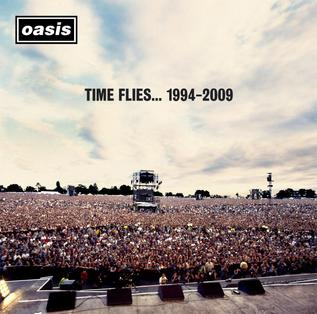
Originally released in 2010, Oasis re-released their singles collection Time Flies… 1994-2009 in time for their much hyped reunion tour. Bringing together all 27 UK singles in non chronological order, for the first half of the two disc album, it barely takes a breath as it spits out hit after hit, anthem after anthem. While the current tour concentrates on the band’s mid 90s heyday, the singles collection spreads it’s wings to include the singles taken from each of the band’s five albums.
Appropriately, the albums starts with their first single “Supersonic”. The track that announced the band to a legion of indie rock fans is still one of their best. Peaking at #31, it was there next singles that kept climbing the charts before finally hitting #1 in the UK with the last song to feature first drummer Tony McCarroll, “Some Might Say”.
For the first 2/3rds of Time Flies…, later singles rub shoulders with early classics. Songs like “Stop Crying Your Heart Out” and “The Hindu Times”, not to mention “Lyla” and “Go Let It Out” are nearly as anthemic as anything in the band’s lengthy cannon. The Liam Gallagher penned “Songbird” stands out as a simple laid-back tune. Two non-album singles also appear: Released in late 1994, “Whatever” was the first track the band released after their debut and making it’s first album appearance, “Lord Don’t Slow Me Down”.
One of the things that made the band beloved by their fans was that the B-sides were as good as the A-sides. Because of that, several of their most popular songs do not appear like “Acquiesce” and “The Masterplan”. The inclusion of these would make for a better album, instead listeners get to re-discover the nearly 10 minutes of “All Around The World”. Several later singles appear at the end, like the compiler gave up trying to mix the eras together and because of that, the foot gets slightly taken off the gas. By just sticking to just the singles, Time Flies… 1994-2009 offers several selections other than the usual batch of tracks that would otherwise have made appearances.
Released in 1996, Bilingual was the first Pet Shop Boys album released while much of the UK was enthralled with the Britpop sounds of blur and Oasis, the former having tapped PSB to remix their hit single “Girls and Boys” a few years earlier. The album still saw the synth duo enter the Top 5 in the UK album charts and have 3 of its singles reach the UK Top 10. PSB worked with several producers on the album including DJ Danny Tenaglia on first single, the house sounding “Before”.
With a slightly slower beat, the Latin sounds of “Se A Vida e (That’s The Way Life Is)” are as joyous as they are catchy. “A Red Letter Day” is an immediately upbeat pop dance tune but with a dash of the duo’s melancholy. The drums from first track “Discoteca” then carry “Single-Bilingual” that has an elegant strut about a businessman moving throughout the continent. Mixing their dance pop with some Latin touches, Bilingual is a good album with plenty of tracks to carry the day.
The extra disc on this Essential Listening version contains the usual mix of B-sides, rarities, and extended sounds including two versions of “Discoteca” and the expanded single version of “A Red Letter Day”. The duo reaches behind for the throbbing beat of “Paninaro ’95”, originally released as a single for their Alternative B-side album released the year before. Several terrific songs from the period appear including the fun of “The Truck-Driver and His Mate”, the instrumental version of the hi-energy “In the Night (1995)”, the simplicity of “The Calm before the Storm” and the grand sounds of “Delusion of Grandeur”. The second disc is frequently very good and at times outperforms the main album for memorable tracks.
The Wet Leg duo from the Isle of Wight return with their sophomore album, moisturizer, this time members of their touring band officially join as band members and songwriters. This includes the excellent rhythm section of bassist Ellis Durand and Henry Holmes on drums. They add a low end groove to tracks like single “Davina McCall” named after the popular English TV presenter.
Lyrically, Wet Leg are all about love, a theme that appears again and again. Singer Rhian Teasdale sings it implicitly on second single “CPR” – “I’m in love and you’re to blame”. That appears again on the upbeat “liquidize” on the very first line, “love struck me down”. Moving away from that theme, “Catch Fists” instead threatens males who try to come into the woman’s space when out with her friends. Guitarist Hester Chambers takes over vocals on two of the tracks, it sees her vocals buried slightly in the mix on “Don’t Speak” that also adds some My Bloody Valentine like guitars.
moisuturizer sees the Teasdale/Hester duo move a bit away from their quirky debut that gained them much notoriety and shot to #1 on the UK charts. Many of the songs here are just solid indie rock songs that are played with a bit of style and lots of attitude thrown in. “Jennifer’s Body” is a straight-ahead rocker that compares love to riding on the second level of the double deck bus. It’s a solid album from the band that saw them take the #1 album slot in the UK while the rest of the country was at the Oasis gigs.
In some ways, the Autobahn album by Kraftwerk feels like their first one but it’s actually their fourth release. It’s the first entry point for many, like skipping the early Pink Floyd or Fleetwood Mac to jump into the later catalogue. The core two of Germans Florian Schneider and Ralf Hutter added Klaus Roder and Wolfgang Flur to create an album that is split into two. The 22-minute title track takes up side one with four other songs making up side two of this album that went top 5 in both the US and UK.
Starting with a car door slam, the auto is started and the music starts to drive onto the “Autobahn”. Cinematic, it starts with the sound of driving down the highway while passing by rolling plains and fields of wheat. It’s Kraftwerk’s first track with lyrics that immediately get misinterpreted. Singing “drive drive drive” in German, the words sound like The Beach Boys-like “fun fun fun” in English. The Moog bassline is the main sound with a guitar and flanged synths. Later the sounds gets tighter, more serious, as busy traffic appears before turning into spacey prog. It’s truly an epic song with ebbs and flows like driving down a highway on a long road trip.
The second side is the come down after the glorious first side, with shorter songs that are more of a soundscape. “Kometenmelodie 2 (Comet Melody 2)” is a lively track with the low end making a bit of a groove with an infectious, more lighthearted sound. With a couple of moody pieces, closing track “Morgenspaziergang (Morning Walk)” is a bit new age-y with a flute and the sound of rushing water.
As an album, it’s side one that will rightfully get all the attention but side two manages to hold the listener’s attention as they recover from the long drive. A remarkable piece of electronic music history that would prove to be as highly influential as it is enduring.




 The Light Appears