Posted in Album Reviews

David Bowie – Re:Call 1 (2015)

David Bowie started released boxsets split up by eras starting with Five Years (1969-1973) that was released in 2015 and has continued with four more sets since then. One of the selling points of the  boxes is the inclusion of compilations which mop up stray singles, alternate mixes, B-sides, etc. Re:Call 1 is a double disc affair that includes the classic “Space Oddity” in two of the first three tracks. The first in mono and the second version sung in Italian. B-side “Conversation Piece” is a psychedelic folk song about a shy boy to nervous to talk to others – “I’m a thinker/Not a talker/No one to talk to anyway”.

“Holy Holy” appears twice and is a good bit of nonsensical fun. Both “Moonage Daydream” and “Hang On To Yourself” appear in Arnold Corn versions, a band that Bowie put together as a lead up to Ziggy Stardust. The versions differ from their more familiar album versions by being slowed/stripped down takes – the former losing it’s glam/metal stomp and the latter sounding like a track from the late 50s.

“John, I’m Only Dancing” also appears twice, in its single edit and the sax version which adds a touch of that horn to great effect.  A Chuck Berry cover of “Round and Round” appears with Bowie doing his best Mick Jagger impression. The whole set is closed off with impressive B-side “Velvet Goldmine”. The track left off albums, possibly due to its risqué nature is a stomper before it slows with its piano chorus.  While there are a few skippable moments, Re:Call 1 is a terrific collection of odds and sods from Bowie’s first phase.

8/10
Posted in Album Reviews

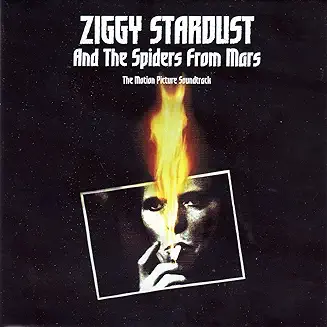
David Bowie – Ziggy Stardust And The Spiders From Mars: The Motion Picture Soundtrack (30th Anniversary Edition)(2003)

Recorded just over 50 years ago, the soundtrack to the D.A. Pennebaker live concert, Ziggy Stardust And The Spiders From Mars: The Motion Picture, didn’t see release until 1983.  The concert from the Hammersmith Odeon is famous for being the one where David Bowie announced to both the crowd and band that this would be the last ever show by his alter ego – Ziggy Stardust And The Spiders From Mars.

The album has several songs in common with Live Santa Monica ’72 including the guitar bursting “Hang on to Yourself” and of course “Ziggy Stardust”.  The first sound of a blip gets a warm reception from the audience as the band plays, “Space Oddity” and Bowie again includes his cover of Jacques Brel’s “My Death”. “Suffragette City” ends the main set on a high note.

The album swaps out a few tracks from the Santa Monica concert.  Instead of The Velvet Underground’s “Waiting For the Man” you get a joyous cover of “White Light/White Heat”.  “Life on Mars” gets replaced by an abridged version of “Oh You Pretty Things” that appears in a medely with the Bowie penned “All the Young Dudes” and “Wild Eyed Boy From Freecloud” that gets a big ovation from the crowd.

The 30th Anniversary edition includes 5 songs not on the original including the full 16 minute version of “Width of a Circle” that sees the band let loose and jam. It also includes the symphonic introductions that sound like they are played on a small record player to a theatre full of Bowie fanatics. “Cracked Actor” from the recently released Aladdin Sane album is a highlight on both versions. The night closes with Bowie making his famous speech that the Ziggy band will never tour again before they play the fitting “Rock N’ Roll Suicide”.  It was a historical rock and roll night that sees the band in electric form before the curtain closes and the rug gets pulled out from underneath.

7.5/10

Posted in Album Reviews

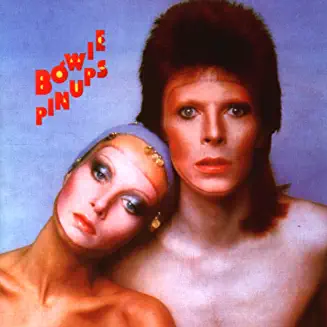
David Bowie – Pin-Ups (1973)

Released 6 months after Aladdin Sane, David Bowie released the covers album Pin-Ups as a stop gap release for the record label. The album is mostly glammed up versions of R&B hits released in the 60s while Bowie was a teenager.  On “See Emily Play” (Pink Floyd), Bowie and The Spiders from Mars (minus drummer Mick Woodmansey) add 90 seconds of psychedelia at the end. Of the two tracks originally by The Who, “I Can’t Explain” is the better one that Bowie turns into a slower, sleazy love song.  “Sorrow” (The Merseys) is another highlight.  The easy, laidback beat adds strings and horns as Bowie turns in a very good vocal performance. 

The two tracks that sound the most like original Bowie songs is “Friday On My Mind” (The Easybeats) and The Kinks’ “Where Have All the Good Times Gone”.  While Pin-Ups mostly feels like a quick, dashed off recording, it does open the listener to several tracks that may have been forgotten.  In the age of streaming, downloading the originals would make for a cracking compilation playlist.

7/10

Posted in Album Reviews

David Bowie – Aladdin Sane (1973)

The sixth studio album from David Bowie, Aladdin Sane, was released in the spring of 1973. The iconic lightning bolt album cover has been recreated countless times by fans and other artists, it also possibly more famous than a lot of the music contained within.  Having to follow-up two classic albums, Bowie wrote much of this album, a pun of “a lad insane”, in the US and has been referenced as “Ziggy (Stardust) goes to America”. A bit more rushed with a  glam rock stomp, the music of Aladdin Sane has a nostalgic yet futuristic feel, especially on second single and #3 UK single “Drive-In Saturday Night”.

The album can certainly rock – “Watch That Man” has horns and piano aplenty as Bowie recalls a night on the tiles in a stream of consciousness like lyrics.  Mick Woodsmansey’s drums add jungle beat behind Mick Ronson’s opening guitar lick on “Panic In Detroit”.  “Cracked Actor” is a violent, dangerous song of an actor meeting up with a  prostitute as Bowie sings, “crack, baby, crack/show me you’re real”.  Mike Garson’s piano adds a barroom feel to the cover of The Rolling Stone’s “Let’s Spend the Night Together” before the most famous song here, “The Jean Genie”, adds another flash of glam rock with a blinder of a chorus.

The harder hits can steal some of the thunder but it’s the slower tracks that really settle in.  The title track asks, “who will love Aladdin Sane?” on a song about bright young things being sent out to war. While the “The Jean Genie” is a belter, the closing track “Lady Grinning Soul” is a stunner. The atmospheric track may sound a bit like blur to 90s listeners.  It’s an incredible song once again built around Mike Garson’s piano that sounds classy and mysterious at the same time. Aladdin Sane would continue to see Bowie’s star rise with a set of songs that make it essential listening for fans of 70s rock and roll.

9/10

Posted in Album Reviews

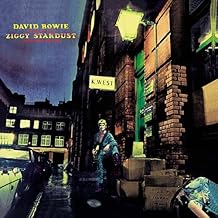
David Bowie – The Rise and Fall of Ziggy Stardust and the Spiders from Mars (1972)

Rise & Fall of Ziggy Stardust by David Bowie (2012-10-21)

Five Years is an important theme in the early part of David Bowie’s career.  It’s the name of his first boxset that covers 1969-1973 and also the name of a 2013 documentary that covers those years.  It’s also the first track on his classic album from 1972 where he unveils his Ziggy Stardust character entitled The Rise and Fall of Ziggy Stardust and the Spiders from Mars.  “Five Years” is the first track with mostly just the spare drum of Mick Woodsmansey, piano stabs, and the occasional bass notes from Trevor Bolder.  The song builds into a crescendo and release as Bowie sings about those being the last five years for Earth to exist.

“Moonage Daydream” is a glam rock stomper with the opening line, “I’m an alligator/I’m a mama-papa coming for you”. The guitar of Mick Ronson goes into the stratosphere while the track gains a whole new generation of fans when included in the Guardians of the Galaxy Soundtrack. The cover of Ron Davies’ “It Ain’t Easy” is mostly remembered for its powerful chorus and the sped-up guitar lines of “Hang On To Yourself” points the way to punk rock that would come a few years later.

The album co-produced with Ken Scott includes three iconic Bowie songs, the first being “Ziggy Stardust”.  The famous guitar riff leads into describing the rock star that “took it all too far but boy could he play guitar” as he falls out with his other bandmates.  Not to be outdone, a second classic guitar riff appears on “Suffragette City”, a song that is still a sure fire floor filler down at the indie disco. The “hey man” lyrics likely pay tribute to Lou Reed and the guitar riff is almost eclipsed by the false ending leading to Bowie exclaim – “wham bam thank you ma’am” before the music comes storming back.

Earlier on the album, Bowie returns to the “Space Oddity” theme on on first single, “Starman”.  The earthbound lyrics expand to widescreen in the chorus where Bowie sings, “There’s a Starman, waiting in the sky/he’d like to come and meet us/but think he’d blow our minds”.  A performance of “Starman” was beamed into living rooms across the UK thanks to his appearance on Top of the Pops where many future singers were taking notes.  Regularly regarded as one of the greatest albums of all time, The Rise and Fall of Ziggy Stardust and the Spiders from Mars propels Bowie into stardom and most of its tracks can still be heard on classic rock radio every day, everywhere around the world.

10/10