Posted in Album Reviews

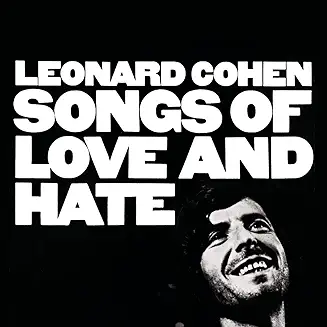
Leonard Cohen – Songs Of Love And Hate (1971)

Leonard Cohen’s third album, Songs Of Love And Hate, came out in the late winter of 1971.  Again working with producer Bob Johnston, the first half of the album feature longer songs, that can be really dark with few choruses. This starts right away with the intense guitar work of first song “Avalanche”, a dark and moody lament covered in six verses. A children’s choir appears on “Dress Rehearsal Rag” where Cohen sings “That’s not the electric light, my friend/That is  your vision growing dim”.

“Love Calls You By Your Name” gets attention right from the start with strings adding a cinematic intensity to Cohen’s poetry. On “Joan of Arc”, Cohen sings for the famous martyr that she is “tired of the war” and wants to wear “a wedding dress”.  The  most well known song here, “Famous Blue Raincoat” is another cinematic track that is a classic Cohen.  No less sullen than anything else on the album, the words “the last time we saw you, you looked so much older” still cut.

The first side of Songs Of Love And Hate can be a tough go.  Sounding like Bob Dylan at times but mostly it wallows in sadness. The second side is easier to get through with its intriguing stories. orchestral strings and slightly less moody atmosphere.

7.5/10

Posted in Album Reviews

Leonard Cohen – Songs From A Room (1969)

After an aborted session with David Crosby, Leonard Cohen turned to producer Bob Johnston for his second album, Songs From A Room. Starting with the classic, “Bird On The Wire”, the plaintive song adds strings to the background.  Here Cohen opens up, for better or worse, as he sings, “If I have been unkind/I hope that you can just let it go by”.  Several songs are biblical in nature and recall Bob Dylan on tracks such as “Story of Isaac” and “The Old Revolution”. With a touch of echo in the vocal, Cohen sings of an acquaintance who committed suicide at too young of an age on the haunting “Seems So Long Ago, Nancy”.  

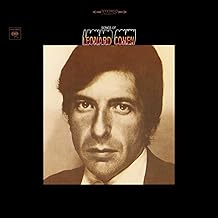
The songs on the sophomore album sound more stark and cold than than Cohen’s classic debut album from 1967.  Whereas the cover of that album shows the singer in colour, here he is shown in black/white, just a shadow.  The album warms up towards the end with “Lady Midnight” that adds an organ/keyboard in the background and closes with the simple folk pop sound of “Tonight Will Be Fine” that will have the listener nodding along as Leonard Cohen sings “and I know from your smile/That tonight will be fine…for awhile”.

7.5/10

Posted in Album Reviews

Leonard Cohen – Songs of Leonard Cohen (1967)

Songs of Leonard Cohen

Upon release in late 1967, Leonard Cohen’s debut entitled The Songs of Leonard Cohen would reach the lower end of the US Hot 100 charts but do considerably better in the UK, barely missing the top ten.  Released when he was already 33 years of age, these songs describe life in the quieter and darker parts of the 60s rather than the technicolour of some of his contemporaries. The Montrealer moved to New York for a time and came to the attention of Judy Collins who covered many of his songs including a few Cohen future classics.

“Suzanne” was originally released in a book of poems, a sensuous song of love and religion where she will “feed you tea and oranges that come all the way from China”. It has a mystical quality far beyond it’s spare accompaniment that would become of Cohen’s most beloved songs and one that Pitchfork ranked as #41 on their list of best songs of the 1960s.  The other Cohen song that appeared on the list is “So Long, Marianne” that was inspired by Marianne Ihlen whom he met in Greece and lived with throughout the 60s.  This time producer John Simon adds some bass and female backing vocals on a joyous singalong where we “laugh and cry and cry and laugh about it all again”.

As he moved around the globe, many of the tracks remark on meeting people along the way of life.  “Sister of Mercy” about travelers who shared his Edmonton hotel room one night adds fairground sounds to the background. “I’m just a station on your way” sings Cohen on “Winter Lady” that is lighter in tone than the previous heavy religious tones of “Master Song”. Female vocals again appear on the lovely and sentimental pop song “Hey, That’s No Way to Say Goodbye”.

Surprisingly, the reviews of The Songs of Leonard Cohen were mixed upon release but is a record that has grown in stature over the years.  It’s not a perfect album, rather a flawed masterpiece with several essential Cohen songs that have endured for over 50 years. The spare and intimate recording is a true landmark and as the UK sales agree, a legendary bedsit album. It is one that continues to find it’s way into record collections the world over.

10/10