Posted in Album Reviews

Paul Simon – Paul Simon (1972)

Nearly two years to the day that the last Simon & Garfunkel album was released, the mega selling Bridge Over Troubled Water, Paul Simon returned with his second solo album.  The self titled album is based on acoustic singer-songwriter tracks but here Simon adds reggae touches and a couple blues based songs. The first two singles have pop elements with a nice flow. 

“Mother and Child Reunion” starts off the album on a track that reached the US #4 on the singles charts. Here Simon adds an island flair with some reggae flourishes on a track based on his pet dog dying.  Similarly, the enduring second single “Me and Julio Down by the Schoolyard” is a pop track about a woman who calls the police as “what the mama saw, it was against the law” but the crime is never revealed.

“Everything Put Together Falls Apart” seems to reference drugs and the toll they can take. Later, the deep guitar sound of “Peace Like a River” sounds like CCR while he sings about what it would be like to live under martial law. “Duncan” is six verses of a story of a boy born to a fisherman before moving away, flutes between the verses add a nice touch.

A couple of songs refer to Simon’s then rocky marriage to his first wife, Peggy Harper. “Run That Body Down” sees Simon sing about going to see his therapist while on “Congratulations” he sings that “love will bring you down”.  Paul Simon’s first album since the dissolution of his highly successful duo is an eclectic record but rooted in acoustic sounds.  He leaves behind some of the bombast and skyscraper singing of the Garfunkel years, instead goes for breadth with various flourishes added to his sound. A very good early 70s album.

9/10

Posted in Album Reviews

Bob Dylan – Self Portrait (1970)

The first Bob Dylan album of the 1970s continues his leftfield turn that he took with both John Wesley Harding and Nashville SkylineSelf Portrait is made up of four sides of six songs per side, mostly two-three minute songs vs the epics he released through the 1960s. A mixture of new material, live tracks, and covers – it is an eclectic mix of songs that has confused and confounded fans and critics alike for over 50 years.

One of the most striking and memorable songs is the lead track, “All The Tired Horses”.  Using female singers, the song creates a hypnotic groove as they sing the same lines over and over again – “All the tired horses in the sun/How am I supposed to get any riding done?”. The only single released from the album is “Wigwam” that sees Dylan sing along “La dah dah dah” to a horn section that rises and falls. The live version of “Minstrel Boy” on the other hand is a chore to get through.  Other live versions include a laidback take on his own classic, “Like a Rolling Stone”.

“Days of 49” is one of the most Dylanesque tracks here, the midtempo song takes in storytelling over six verses. Dylan tackles a Gordon Lightfoot song in “Early Mornin’ Rain” then on side two, a country sounding version of a song made popular by The Everly Brothers’ “Let It Be Me”.  The sentimental “Blue Moon” makes an appearance but the most memorable cover is his version of Simon & Garfunkel’s “The Boxer”.  Sung as a duet with himself in two different singing styles, it is difficult to make out if it’s a tip of the hat to his contemporaries or a parody of one of their most beloved songs.

For listeners coming to Self Portrait for the first time, expectations will be low as the album has been maligned for years.  While certainly not a lost classic, there are several songs that are worthy of repeated listens.  It would have been hard at the time to make sense of what Dylan later described as a joke album and saying that the album is a pleasant background listen when it’s made by the voice of a generation is faint praise.  But all these years later, Self Portrait does indeed make for a pleasant listen.

6.5/10

Posted in Album Reviews

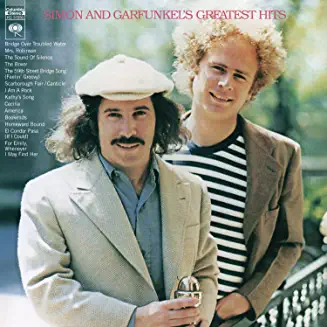
Simon & Garfunkel’s Greatest Hits (1972)

Released two years after they disbanded, Simon & Garfunkel’s Greatest Hits went into the top 5 in both the US and UK.  It breaks many fundamental rules of compiling a greatest hits album – it’s not in chronological order, it substitutes live versions of hit songs, and it leaves off several important tracks.  Somehow this collection makes it all work. The aforementioned live versions chosen here are all exceptional.  “The 59th Street Bridge Song (Feelin’ Groovy)” is warmer than its studio version and both “For Emily, Whenever I May Find Her” and #1 single “Bridge Over Troubled Water” are showstoppers featuring Art Garfunkel’s soaring vocals.

 Two other US #1 singles appear, the duo’s first hit “The Sound of Silence” and the “coo coo ca choo” of “Mrs. Robinson” from The Graduate OST. Besides the title track, all the other hits of Bridge Over Troubled Water appear with the upbeat folk rock of “Cecilia” closing out the set.  While the collection is missing key tracks like “The Dangling Conversation”, “A Hazy Shade of Winter”, and “The Only Living Boy in New York” – what is included here is some of the best folk rock of the 60s and early 70s.  While other collections gather more of the duo’s essential tracks, the enduring popularity of this album made it a must for inclusion on Simon & Garfunkel: The Complete Albums Collection.

10/10

Posted in Album Reviews

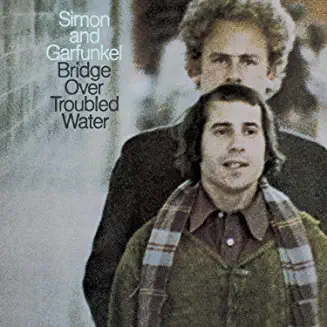
Simon & Garfunkel – Bridge Over Troubled Water (1970)

The last Simon & Garfunkel studio album came out in 1970, just under six years after their debut. Once again working with producer Roy Halee, the album starts off with the iconic title track.  A dramatic opening sounds almost like a Christmas carol in its hymn like devotion. Art Garfunkel’s performance soars as strings and cymbals crashing come up to meet him. This is pop music at its highest form.

Beyond the title track, the next two songs were also singles.  “El Condo Pasa (If I Could)” has a folky, Spanish feel that hit #1 in several countries. A memorable drumbeat opens “Cecilia”. The infectious track will eventually end up on many party playlists and remains one of the duo’s most popular songs. At the opposite end of the spectrum, “The Boxer” has a softer drumbeat where Paul Simon sings “lie la lie”, that acts as a hook but was originally in the song as filler. The epic track follows the story of a boy who leaves home, “seeking out the poorer quarters, where the ragged people go” before becoming the boxer.

“So Long, Frank Lloyd Wright” came about when Garfunkel asked to have a song written about the famous architect.  A laid-back tune that can double as an allusion to Garfunkel having studied to be an architect in his earlier days.  One of the duo’s most popular album tracks appears on the second half of the album, “The Only Living Boy in New York” is one of the most emotionally charged songs in the catalogue. Simon sings “Tom, get your plane right on time/I know your part’ll go fine”, a direct comment that Garfunkel was off filming a movie in Mexico, leaving Simon behind in NY.  The use of an echo chamber for their voices takes the song to a celestial level. The album winds down with a live cover of “Wake Up Little Susie” before finishing with just Simon and his guitar singing, “Song for the Asking”

The debate rages on as to which the critics think is their masterpiece, this or 1968’s Bookends. The public voted with their wallets. With four of their most well-known songs, Simon and Garfunkel went out with a bang as Bridge Over Troubled Waters would go on to be the duo’s most popular album with approximately 25 million units sold.  A truly great album that deserves a spot in every record collection.

10/10

Posted in Album Reviews

Simon & Garfunkel – Live 1969 (2009)

Recorded in 1969 but not seeing a full release until 2009, Simon and Garfunkel’s Live 1969 captures the duo just before the release of their last album, Bridge Over Troubled Water. About a third of the tracks were also included on the Live 1967 release including another spellbinding take on “For Emily, Whenever I May Find Her” that later appeared on their Greatest Hits collection that also included the live version of “Kathy’s Song” but cuts out the raucous audience before launching into the track.

Unlike the 1967 Live release that captures just one night, 1969 takes in several locations and includes a crack band of hired hands to augment the duo but never overshadow. The band is most heard during the smash hit “Mrs. Robinson” and Hal Blaine’s subtle drumming adds an extra layer to “The Boxer”. “Scarborough Fair/Canticle” is a track that lets Garfunkel shine with Simon adding the minimalist of acoustic guitar and additional vocals.

The centrepiece of the album is, “Bridge Over Troubled Water”.  Garfunkel introduces the yet to be released track over a piano introduction to no crowd applause whatsoever.  What follows is a stunning rendition of one of the most popular tracks of the early 1970s.  The version manages to make the arm hairs stand on end over 50 years later.  After the last note sounds, the crowd recognizes that they’ve just heard a song that will be in their lives forever and proceeds to give a thunderous ovation.

The album also includes earlier hits such as “I Am a Rock” and #1 hit “The Sound of Silence”. Both are fine renditions but the 1967 version gets the nod for being the fresher sounding.  Even though it’s just two years later, the duo sound wearier on a tour that proves to be one of their last as Simon & Garfunkel for 20+ years.  Capturing the band about to release their next classic album, Live 1969 is a must have sound document for those wanting to catch some of the last moments of this classic folk rock duo at the tail end of the 60s.

8/10