Posted in Paper Chase

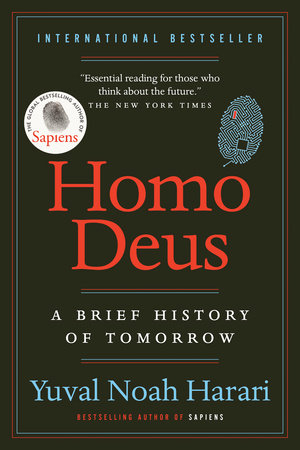
Yuval Noah Harari – Homo Deus

The follow-up to his very successful book, Sapiens, Yuval Noah Harari looks to the “History of Tomorrow” in his book Homo Deus.  Released in 2016 the book explores what has happened over the last several decades.  Hunger, wars, and disease have become more manageable for most people/countries. As noted, most people are more likely to die of overeating than being malnourished. The book then looks to what may happen in the future – the continued rise of AI, new ideals, the importance of “dataism”, not to mention the rise of new god humans to replace Homo Sapiens. 

While it was published 9 years ago, much of it is still relevant today and it’s fascinating to read in the midst of all the changes happening in the world in just the last 9 months. The book talks a lot about AI and the super-rich using technology to increase their wealth and life expectancy, leaving most of the world behind to suffer as their jobs are replaced by computers and are left with little meaning.  It’s certainly a dystopian view. As he notes, Harari tells his ideas of the future to a colleague who’s reply is that she hopes she’s dead before all this happens.  It was exactly what I thought as I was reading the passage.

While many others don’t agree with his view, as noted in various reviews, Home Deus is a fascinating look into the future.  It’s one that will surely get the reader to think about what this will all actually look like and what he/she wants to leave behind for the next generation.  It’s hard to fathom what happens tomorrow, but in a lot of ways, tomorrow is already here.

9/10
Posted in Paper Chase

Q2 2023 Read It

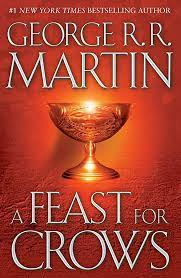
George R.R. Martin’s fourth book in the Songs of Ice and Fire series, A Feast For Crows, comes in at a mere 976 pages.  Martin wrote a lot more for the novel but instead split up the plotlines and moved them to the next book. This means the reader gets very little Jon Snow or Dany Targaryen.  Some of the storylines are not as interesting as others.  The scenes taking place in Dorne and the Iron Islands are not nearly as interesting as Cersei’s scheming, Jaime and Brienne’s relationship, or Arya becoming no one.  Not as intense as the first three books but still entertaining, especially as it ends with Cersei in much trouble and begging for her brother’s help.

8/10

There have been several great books written about the astonishing career The Smiths over the years. This list includes Morrissey & Marr: The Severed Alliance by Johnny Rogan, Songs that Saved Your Life by Simon Goddard, and A Light That Never Goes Out by Tony Fletcher.  Perhaps it rubbed Morrissey the wrong way watching others write about both his life and his band without him having a say in the matter so 10 years ago he published his own autobiography that includes his life after The Smiths.  The book starts out on a high note as Steven Patrick Morrissey writes about growing up in Irish Manchester in the 60s and 70s.  Across 100 pages, it brings to life the areas and homes that he lived in as a boy then teenager. 

For readers expecting an equal amount of love put into writing about his music, they will be sorely disappointed.  Instead, Morrissey writes extensively about his court proceedings with former Smiths drummer Mike Joyce.  Then takes endless swipes at managers, record labels, ex-bandmates, etc.  It turns into a slog of reading about perceived slights and encounters with other singers.  The book then finishes as a sort of tour diary where he writes about concerts, towns and theatres.  It’s a tiresome read that is sadly light on the music he’s created over the years.

5/10

Sapiens: A Brief History of Humankind by Yuval Noah Harari is one of those books that appears everywhere since it was published in 2016.  It appears on bestseller lists, critics lists, front and centre in bookstores, and on Instagram pages – all for good reason.  Harari writes about 70,000 years of evolution, development, and accomplishments of Homo Sapiens.  This includes subjects such as empires, agriculture, science, culture, religion, etc.  The writing style is easy to follow and includes little asides and humour throughout. It’s one of those books that grabs readers immediately and makes them want to explore further into the history of Sapiens.

9/10