Posted in Album Reviews

Buffalo Springfield – Buffalo Springfield (1967)

Buffalo Springfield formed in 1966 when Canadian Neil Young teamed up with American Stephen Stills in Los Angeles to form the new group. The band then then released their self titled debut later that same year.  First single, “Nowadays Clancy Can’t Even Sing”,  is one of Young’s songs sung by guitarist Richie Furay. The song is a melancholy track with a mournful harmonica about Young’s then stalled career – “who’s putting sponge in the bells I once rung?”  Chiming guitars opens “Flying On The Ground Is Wrong” on another emotional song about losing friends while doing drugs, “I’m sorry to let you down/But you’re from my side of town/And I miss you”. Young shows his versatility at a young age when he takes over vocals on the grittier second single, “Burned”.

Many tracks are in the style of the burgeoning country or folk rock scenes that the band was helping to create.  “Go and Say Goodbye” has that sound but there is also a tinge of a British influence on the Stills written song about a friend breaking up with a girlfriend. It also shows on the pop rock of “Sit Down I Think I Love You” where Stills sings the 60s ode to love that “I get high just being around you”. Elsewhere, the dueling guitars of “Everybody’s Wrong” is terrific.

The album was originally released in December of 1966 but was later reconfigured and re-released in March 1967 after the Stills written “For What It’s Worth” became a top ten hit in the US.  The protest song written during LA riots of young people gathering late into the night has become a mainstay in popular culture when recreating scenes of the 60s counter culture. The song is recognizable right from the first chord with Stills perfect, deep delivery and a chorus that turns it into an anthem.  The self titled Buffalo Springfield album is a mid 60s classic.

9/10
Posted in Paper Chase

Q4 2023 Read It (Better Late Than Never)

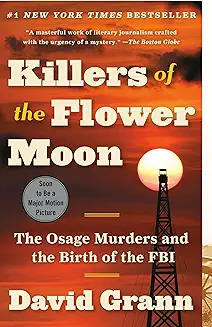
Killers of the Flower Moon by David Grann was a huge sensation in the publishing world when it came out in 2017.  The popular nonfiction book was later made into a movie by Martin Scorsese starring Robert DeNiro and Leonardo DiCaprio.  The book tells the tragic tale of the Osage Nation who discovered oil on their area of land in Oklahoma and became the richest people in the world during the 1920s. A heinous plot by William Hale saw the murders of the tribe in order for others to gain the head rights to the oil.  It’s a sad yet page turning book on surely one of the most shocking atrocities of the 20th century.

8.5/10

Through the work of Ryan Holiday, and Instagram friendly quotes, Meditations by Marcus Aurelius has seen a resurgence in popularity among mainstream crowds. The book is a journal of Aurelius’ thoughts during his time as Emperor of Rome. Popular quotes include “You have power over your mind – not outside events”, “The happiness of your life depends on the quality of your thoughts”, and “The impediment to action advances action. What stands in the way becomes the way”. While not always the easiest read, it is fascinating to look into the mind of this legendary figure.

10/10

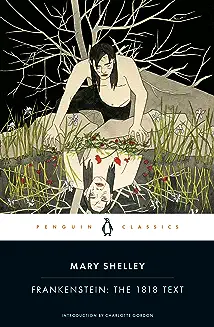
Mary Shelley’s classic novel Frankenstein:  The 1818 Text is noted as being the first ever sci-fi novel. The gothic overtones make the overall feel one of darkness and gloom.  Dr. Frankenstein creates new life in his Swiss laboratory before the creature escapes.  The new being learns to speak and read while trying to find companionship as he lives a solitary life.  His rejection by society, and especially his creator, is what ultimately turns him into a monster.  A tragic tale that is a fascinating read especially around Halloween.

10/10

Prairie Fire – volume 43, No. 1 (Spring 2022)

Prairie Fire – volume 44, No. 3 (Fall 2023)

Posted in Album Reviews

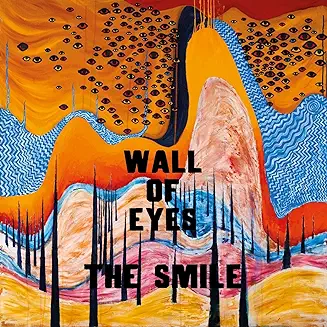
The Smile – Wall of Eyes (2024)

Thom Yorke and Jonny Greenwood have once again teamed up with jazz drummer Tom Skinner for their second release under the moniker, The Smile.  Wall of Eyes is a moody, atmospheric listen that incorporates electronics and prog-like moments through its 45 minutes. A warm sound envelopes the title track with echoey drums that sound like they are played through pillows. Guitars appear from the onset of “Read the Room” with its indie rock sound and military drumming. The guitars go from art rock to 70s rock on the outro with Yorke’s spacey vocals.

The piano of “Friend of a Friend” brings a new dimension to the sound as Yorke sings about Italians during COVID appearing to sing/talk on their balconies. The cold breeze returns on “I Quit”, a softly sung track with a defiant stance.  “I quit… this is my stop/this is the end of the trip”, is sung over a bed of sounds like obscured traffic horns with muffled beats and the added tension of a string section.

Emblematic of Wall of Eyes is the doom laden yet dreamy 8 minute “Bending Hectic”, a song about driving over the cliff in the Italian country side. For its beautiful moments, icy stares, and warmly sung songs of death – The Smile have delivered an album to dive deep into and then disappear completely.

8/10

Posted in Album Reviews

The Doors – The Soft Parade (1969)

The Doors last album of the 60s, The Soft Parade, is a mixed bag of sorts.  Combining their Californian take on the blues (“Shaman’s Blues”) and lengthy album closer (“The Soft Parade”), the band add orchestration and a nostalgic feel to their sound.  The story goes that singer Jim Morrison hated the Robby Krieger penned opening track, “Tell All The People”.  Still, Morrison turns in a solid vocal performance on the somewhat schmaltzy track. Not coincidently, this is the first album by The Doors where songs are credited to individual writers instead of the band as a whole.

Much better is the top 3 US hit, “Touch Me”.  The organ and drumming of John Densmore build up before the song bursts into a showtune.  A sax solo later appears as Morrison croons, “I’m going to love you/Til the heavens stop the rain”.  One of The Doors finest songs.  While mostly inessential, “Do It” sounds like it could have been released in the late 80s during the second coming of love with it’s swirling organ and groovy bass. The band give a nod to Otis Redding who had recently passed away on “Runnin’ Blue” and throw a few good guitar licks on “Wild Child”.

The aforementioned title track reaches for greatness like previous album closers, but instead goes all over the place then ends up nowhere.  The album went top ten in the US but did inexplicitly neither “Touch Me” nor the album charted in the UK. One of the lower reaches of The Doors career but still turns in a few fine performances especially the drumming of Densmore.

7/10

Posted in Album Reviews

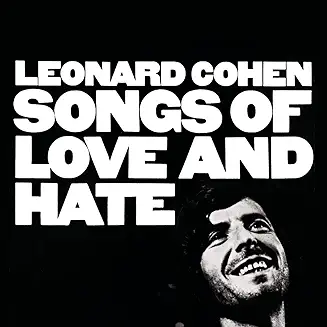
Leonard Cohen – Songs Of Love And Hate (1971)

Leonard Cohen’s third album, Songs Of Love And Hate, came out in the late winter of 1971.  Again working with producer Bob Johnston, the first half of the album feature longer songs, that can be really dark with few choruses. This starts right away with the intense guitar work of first song “Avalanche”, a dark and moody lament covered in six verses. A children’s choir appears on “Dress Rehearsal Rag” where Cohen sings “That’s not the electric light, my friend/That is  your vision growing dim”.

“Love Calls You By Your Name” gets attention right from the start with strings adding a cinematic intensity to Cohen’s poetry. On “Joan of Arc”, Cohen sings for the famous martyr that she is “tired of the war” and wants to wear “a wedding dress”.  The  most well known song here, “Famous Blue Raincoat” is another cinematic track that is a classic Cohen.  No less sullen than anything else on the album, the words “the last time we saw you, you looked so much older” still cut.

The first side of Songs Of Love And Hate can be a tough go.  Sounding like Bob Dylan at times but mostly it wallows in sadness. The second side is easier to get through with its intriguing stories. orchestral strings and slightly less moody atmosphere.

7.5/10