Posted in Album Reviews

Bob Dylan – Another Side of Bob Dylan (1964)

Another Side Of Bob Dylan

A mere 8 months after releasing The Times They Are A-Changin‘, Bob Dylan returned with his fourth studio release, Another Side of Bob Dylan.  The album title is appropriate.  While Dylan continued to mostly feature just guitar and harmonica, all of which were played by himself, the songs take on a more personal nature versus the politically charged folk songs of previous efforts. All the tracks were recorded in just one day of recording with Producer Tom Wilson.

“All I Really Want to Do” is more of his new style as he sings and yodels, “…is baby be friends with you”. Dylan adds piano to “Black Crow Blues” that has a 50s rock and roll mixed with a bit of blues. Lighter tracks like “I Shall be Free No. 10” and “Motorpsyco Nitemare” add a dose of humour to the album. Even though it’s just played with an acoustic guitar, “Spanish Harlem Incident” could be a garage rocker where Dylan sings of a girl who’s “temperature is too hot for taming”. “I Don’t Believe You (She Acts Like We never Have Met)” describes the morning after the night before with a lover where the “morning’s clear/It’s like I ain’t here/She acts like we never met”. The refrain really brings “My Back Pages” home with its earworm lyric, “Ah, but I was so much older then/I’m younger than that now”.

Dylan returns to his political folk song roots on the seven minute “Chimes of Freedom” where he watches a rain storm that tolls “for the luckless, they abandoned and forsaked”. The only track here that appears on most compilations is the vulnerable, “It Ain’t Me Babe”.  Here Dylan tells a girl that he’s not the one for her and that she should find someone else.  It’s one of his classics that has endured to present day and was later covered by The Turtles and Johnny Cash.  Many other tracks here were covered by The Byrds and popularized through their folk rock movement including “Chimes of Freedom”. While Another Side of Bob Dylan may not be as beloved as some of his other massive albums from the 60s, it is one that newcomers to Dylan may be able to get into easier as it mixes some of the political with love, humour and a healthy dose of genius.

10/10

Posted in Album Reviews

Jane Weaver – Flock (2021)

Flock

Flock marks Jane Weaver’s first album to hit the top 40 in the UK.  The English singer from Liverpool’s 11th album is a varied recording taking in many different sounds. This is the follow-up to her remix album of tracks from Modern Kosmology and a reimagined soundtrack for the animated movie Fehérlófia. The title track here sees Weaver exploring cosmic 70s soul. “Stages of Phases” uses cascading synths before turning into a dreamy stomping glam number.

Weaver gets funky on first single “The Revolution of Super Visions” and adds a chiming guitar to second single “Heartlow”. The album really shines on the six minute “Modern Reputation” that is powered by a throbbing beat where “ahhhhs” are sung at various tones. The album closes on a its poppiest note with the upbeat dance track “Solarised”. Flock is experimental, atmospheric and organic sounding.  The contrasting styles come together, often in the same song, taking the listener for a starlit pop journey.

7.5/10

Posted in Album Reviews

The National – The National (2001)

The National

In Lizzy Goodman’s excellent book, Meet Me In the Bathroom that focuses on the New York rock scene of the early oughts, tellingly The National appear in a chapter entitled, “The Uncool Kids”.  However, over the years they would become one of the biggest bands to emerge from that burgeoning scene having now released 8 studio albums.  Back in 2001 though, they would release their self-titled debut on Aaron and Bryce Dessner’s Brassland Record label.

Featuring drummer Bryan Devendorf on the cover, this is before Bryce had officially joined the band but plays on several tracks.  “Cold Girl Fever” is a catchy acoustic led track with a squiggly synth and a drum that kicks things up before the end. “Beautiful Head” and “The Perfect” are solid college rock songs. Elsewhere the album strays into country influenced sounds on the upbeat “Pay For Me” with a twang in Matt Berninger’s vocals. The laid back “Bitters & Absolut” has fine backing vocals courtesy of Nathalie Jonas and a lovely piano towards the end.  The National’s debut is a well-played album with Berninger still trying to find his voice that would eventually lift the band to far greater heights.

6.5/10

Posted in Album Reviews

The Hold Steady – Open Door Policy (2021)

Open Door Policy

Open Door Policy is The Hold Steady’s eighth studio album and second since the return of keyboardist Franz Nicolay. ODP has all the hallmarks one comes to expect from The Hold Steady, the wordy wordplay of vocalist Craig Finn along with the driving rock sound of the band.  There are cool little moments in each song.  The “woooo” background vocals of “Unpleasant Breakfast” and the horn section courtesy of Stuart Bogie and Jordan McLean, formerly of Antibalas, that adds lift to third single “Spices”.

“The Feelers” is a solid introduction to both the album and The Hold Steady.  A varied track with some piano and strings before the drums and guitar really start to pump. “All the things you never really noticed before/Turned out they don’t even matter/’Cause when someone hits the switch in the kitchen/All the insects just scatter”.  The more straightforward rock songs don’t quite hit the same way, unlike lead single “Family Farm” that comes out with blazing horns and guitar or the handclapping pop rock of “Riptown”. The best parts here are when the band is really cooking rather than just focusing on Finn’s intricate lyrics. There’s more than enough of those moments to carry this very good early 2021 album.

8/10

Posted in Album Reviews

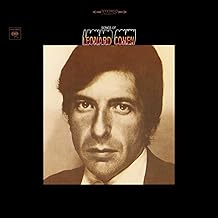
Leonard Cohen – Songs of Leonard Cohen (1967)

Songs of Leonard Cohen

Upon release in late 1967, Leonard Cohen’s debut entitled The Songs of Leonard Cohen would reach the lower end of the US Hot 100 charts but do considerably better in the UK, barely missing the top ten.  Released when he was already 33 years of age, these songs describe life in the quieter and darker parts of the 60s rather than the technicolour of some of his contemporaries. The Montrealer moved to New York for a time and came to the attention of Judy Collins who covered many of his songs including a few Cohen future classics.

“Suzanne” was originally released in a book of poems, a sensuous song of love and religion where she will “feed you tea and oranges that come all the way from China”. It has a mystical quality far beyond it’s spare accompaniment that would become of Cohen’s most beloved songs and one that Pitchfork ranked as #41 on their list of best songs of the 1960s.  The other Cohen song that appeared on the list is “So Long, Marianne” that was inspired by Marianne Ihlen whom he met in Greece and lived with throughout the 60s.  This time producer John Simon adds some bass and female backing vocals on a joyous singalong where we “laugh and cry and cry and laugh about it all again”.

As he moved around the globe, many of the tracks remark on meeting people along the way of life.  “Sister of Mercy” about travelers who shared his Edmonton hotel room one night adds fairground sounds to the background. “I’m just a station on your way” sings Cohen on “Winter Lady” that is lighter in tone than the previous heavy religious tones of “Master Song”. Female vocals again appear on the lovely and sentimental pop song “Hey, That’s No Way to Say Goodbye”.

Surprisingly, the reviews of The Songs of Leonard Cohen were mixed upon release but is a record that has grown in stature over the years.  It’s not a perfect album, rather a flawed masterpiece with several essential Cohen songs that have endured for over 50 years. The spare and intimate recording is a true landmark and as the UK sales agree, a legendary bedsit album. It is one that continues to find it’s way into record collections the world over.

10/10